A 7 night Solomon Islands liveaboard suits divers who want one region covered well, with the cruise starting and ending in Honiara and the final day kept clear of diving before a flight home.
Planning a week onboard is mostly about what fits, how the days run and when to stop diving. For the wider picture of boats and regions, start with the overview of solomon islands liveaboard diving.
Fitting a week into one region
A seven-night trip works best as a deep look at one part of the country rather than a sweep of several. The Solomon Islands sit in what marine biologists call the Coral Triangle, an area recognised for the greatest ocean biodiversity, according to Dressel Divers. That operator describes diving here as reefs, caverns, walls, wrecks and pinnacles, where divers meet pelagics, mantas, sharks and barracudas. A week gives enough time to sample several of those habitats on one itinerary.
Wrecks are a major feature of the diving, according to Scuba Diving magazine. Its examples are the Japanese Maru No. 2, the Seghe P-38 plane and a tuna boat. Divers who want World War II sites alongside walls and pinnacles can usually find a mix within a single week. The boat’s published route decides which sites are actually visited.
One region or a transit
Not every itinerary is a loop. Dressel Divers also offers a vessel transit trip that runs from the Solomon Islands all the way to Papua New Guinea. That is a one-way positioning voyage, so it should not be mistaken for a standard week of local diving. Scuba Diving magazine notes that Bilikiki cruises start and end in Honiara, on Guadalcanal Island, which suggests a return-to-port format for those departures.
The practical rule: a week comfortably covers one region well and is not a promise of several. Divers who want to see more regions should compare itineraries listed by each operator before booking. Those with less time can look at short liveaboard solomon islands options instead.
What the days onboard look like
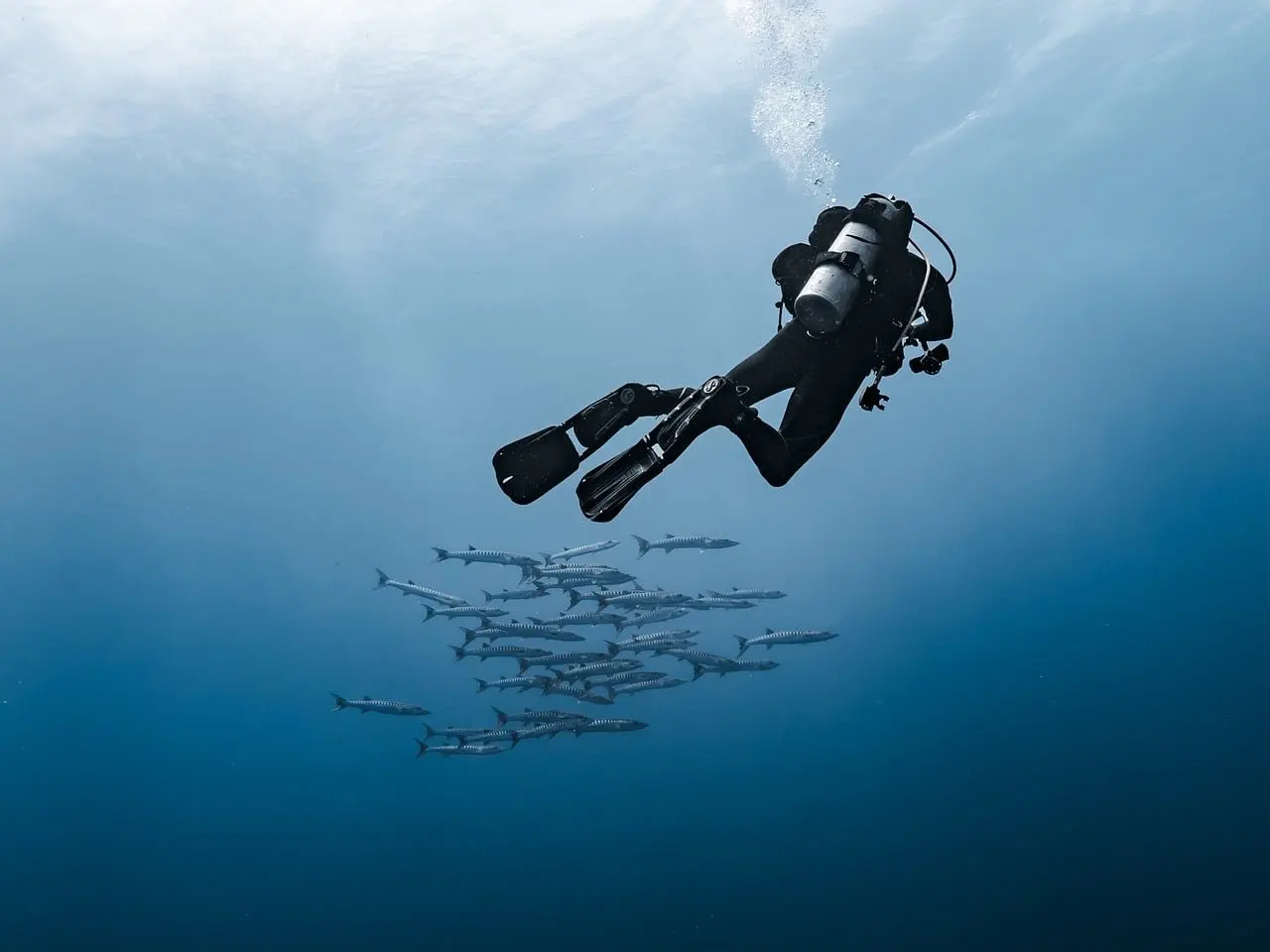
Life on a dive liveaboard runs on the dive schedule, with meals and rest fitted between dives. The pattern repeats across the week, so the useful planning questions are about how much guidance you want and how you track your own dives.
Guided or self-paced diving
At most sites, divers can follow a guide or dive their own profile, often as long as their computers allow, according to Scuba Diving magazine. That makes the dive computer the working tool of the week. Divers comfortable planning their own dives will get the most flexibility. Less experienced divers will usually be happier following the guide, particularly at remote sites.
A logbook and a dive computer on the boat table are the simplest way to keep a consistent record from day to day. Matching your computer’s conservative settings to the operator’s briefing is easier than correcting it midweek.
Evenings onboard
The day ends on deck. Bilikiki guests gather on the sun deck for sundowners with hors d’oeuvres as the South Pacific sunset fades, according to the same magazine feature. Evenings are the natural time to write up the logbook, review the next day’s plan and rest.
Conditions that shape the week
Water temperature, visibility and boat size are the three conditions that most change how a week feels. The table sets out the supplied figures and what each means for planning.
| Factor | What to expect | Planning use |
|---|---|---|
| Water temperature | 80 to 86 degrees F, coolest July through August | Warm enough for a thin suit; a 1 to 3 mm wetsuit is recommended |
| Visibility | About 35 to well over 100 feet, generally lower at nearshore lagoon sites | Expect the best clarity away from sheltered lagoons |
| Bilikiki capacity | 20 passengers in 10 air-conditioned staterooms with en suite bathrooms | A small group, with a double-occupancy rate |
| Dressel vessel size | 12 cabins; 98 ft by 26 ft | Compare cabin counts when choosing between boats |
Figures for water, visibility and Bilikiki come from Scuba Diving magazine, and the Dressel vessel details come from Dressel Divers.
Season and exposure protection
The dry season runs April through October and the wet season January through March, so a week in the dry months is the easier fit for most travellers. Because the coolest water falls in July through August, those months are the time to lean toward the thicker end of the 1 to 3 mm range. Divers who chill easily across several dives a day will notice the difference.
Boat choice affects the week as much as season does. The guide to best liveaboard solomon islands covers how to compare vessels and itineraries.
Nitrox, safety gear and no-fly time
Three pieces of planning sit outside the daily routine but affect the whole week: gas choice, safety equipment and the gap before flying home.
Nitrox
Nitrox is available on the Dressel vessel at extra cost, and rental equipment is also available at extra cost. Divers with a nitrox certification who expect many dives should ask at booking how it is priced and supplied. Divers without certification should check whether training can be arranged before the trip.
Safety gear for remote sites
Scuba Diving magazine recommends a surface marker buoy or personal locator beacon because of the remote nature of the destination. For divers following their own profile, this is the gear to carry on every dive. It matters most away from the main dive boat’s immediate area.
Leaving the last day clear
Flying too soon after diving is a decompression risk. Treat the final day as a rest day with no diving, and confirm the waiting period your dive training agency, a dive medical organisation and the operator recommend before booking your flight. Pick a flight home that leaves clear margin after the last dive instead of the earliest possible departure.
Embarkation and disembarkation
Cruises on the Bilikiki start and end in Honiara on Guadalcanal Island, according to Scuba Diving magazine, so a week-long booking begins and finishes in the capital. Operators set their own check-in and check-out times, so ask for them in writing when you book. Allow for arrival and departure travel on either side of the seven nights, since a late flight can shorten the usable part of the trip.
Frequently asked questions
| Question | Answer |
|---|---|
| How much does a seven-day trip cost? | A seven-day Bilikiki trip starts at $3,920 per person, based on double occupancy, according to Scuba Diving magazine. |
| Is internet available onboard, and can gear be rented? | The Dressel vessel has no internet, but rental equipment is available at extra cost, according to Dressel Divers. |
| Why are the Solomon Islands known for biodiversity? | They lie in the Coral Triangle, an area recognised for the greatest ocean biodiversity, according to Dressel Divers. |