| Situation | Reported pattern | Planning use |
|---|---|---|
| Solomon Islands, remote reefs | Hammerheads schooling where strong currents draw nutrient-rich water | Favour current-swept outer reefs over sheltered sites. |
| Red Sea, Daedalus Reef, Jun–Jul | 75% encounter estimate (Brothers Reef: 45%) | Use as the best-case benchmark for a schooling season. |
| Red Sea, Daedalus Reef, August | 70% encounter estimate | Strong action can continue into warm months. |
| Red Sea, Daedalus Reef, Sep and Oct | 55% (Sep) and 40% (Oct) | Still viable, but odds fade through the shoulder months. |
| Red Sea, Daedalus Reef, Jan, Feb and Dec | 25% floor (Brothers Reef: 15%) | Low season; expect fewer schools. |
The first row comes from Emperor Divers’ account of Solomon Islands wildlife, and the percentage rows are a Red Sea operator’s estimates from Dive Safari Master.
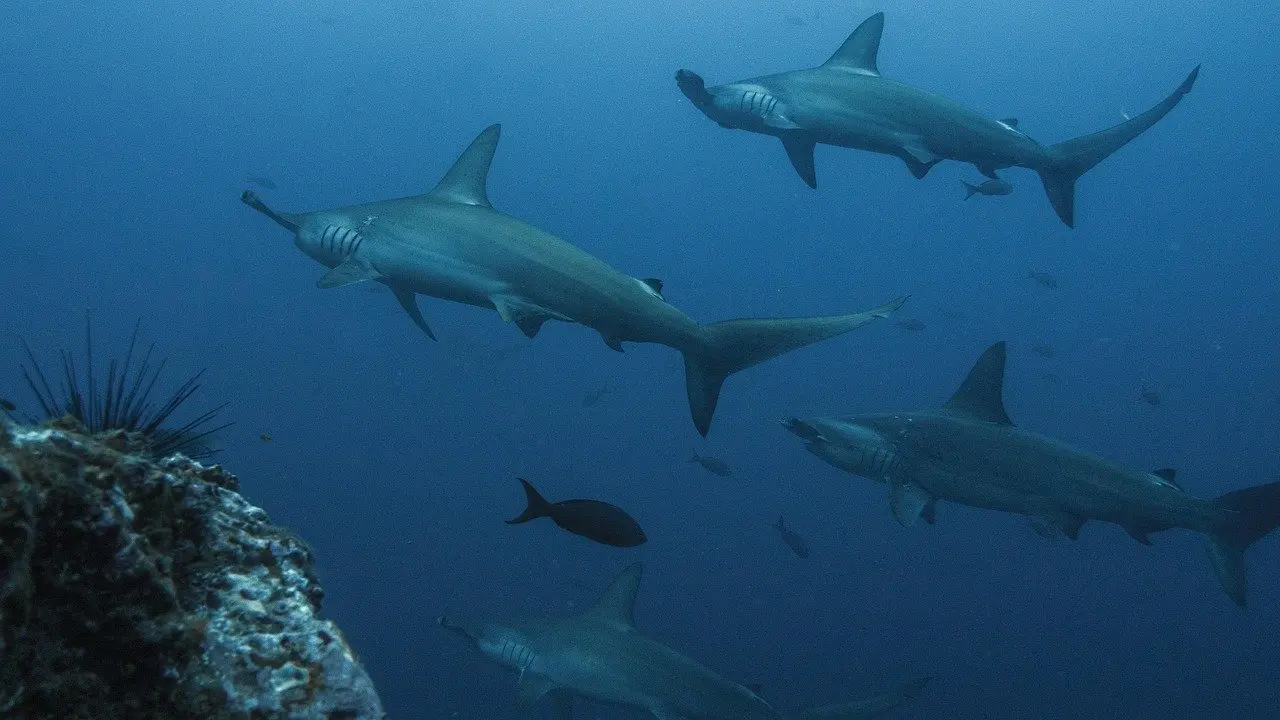
Hammerhead sharks Solomon Islands encounters are realistic mainly at remote, current-swept reefs, where operators describe schools circling above divers. Timing is the main variable; the month-by-month rates in the table are Red Sea benchmarks.
This page sits within the wider guide to solomon islands marine life, and the overview of sharks in the solomon islands covers the other sharks divers can expect in the region.
Are hammerhead sightings realistic here?
Yes, with conditions. Emperor Divers lists the chance to spot hammerhead sharks schooling at remote reefs, where strong currents draw nutrient-rich waters, among the headline wildlife experiences of the Solomon Islands. That makes a hammerhead sighting a sensible goal for a trip, though not a promise. The encounter belongs to particular reefs, not to every dive site in the islands.
The practical consequence is that itinerary choice matters at least as much as the month. A diver whose main aim is a hammerhead school should favour routes that visit remote, current-swept reefs, and should ask the operator which of those sites have been holding schools recently. A diver who is happy with a mixed marine-life trip can treat hammerheads as a bonus rather than the deciding factor.
Timing by phase
The only month-by-month hammerhead estimates in operator reporting come from the Red Sea, where Dive Safari Master rates Daedalus Reef and Brothers Reef. They do not give a Solomon Islands calendar, but they show the shape a schooling season can take: a peak, a fading shoulder and a low season. Read them as a pattern to test with an operator, not as local probabilities.
Peak phase
At Daedalus the estimate peaks at 75% in June and July, and August still reaches 70% despite warm water temperatures. Brothers peaks at 45% in the same months, and the same operator notes that Daedalus outperforms Brothers for hammerheads in every month. The lesson for planning is that the site matters as much as the season: a well-chosen reef in a middling month can beat a weaker reef in the peak.
- Ask for recent reports. Request the operator’s latest hammerhead sightings for the specific reefs on the itinerary.
- Rank sites by schooling. Put sites where schools gather ahead of sites where hammerheads only pass by.
- Keep the peak for schools. If a school is the only goal, this is the phase to choose.
Shoulder phase
The same operator describes hammerhead numbers at Daedalus as still viable in September (55%) and October (40%). That is a clear step down from the peak, so the shoulder suits divers who have other reasons to travel then and would treat a school as a welcome extra.
- Book on other priorities. Choose the shoulder for weather, price or other marine life, not for the hammerheads alone.
Low phase
January, February and December form the low-season floor: 25% at Daedalus and 15% at Brothers. A trip built only around a hammerhead school in these months carries real risk of missing it. If the dates are fixed, widen the target list and treat any hammerhead as a bonus.
- Set expectations early. Plan for fewer schools and more chance meetings.
- Add other targets. Pair the trip with encounters such as manta rays solomon islands, so the dive days are worthwhile either way.
Hammerhead behaviour around divers
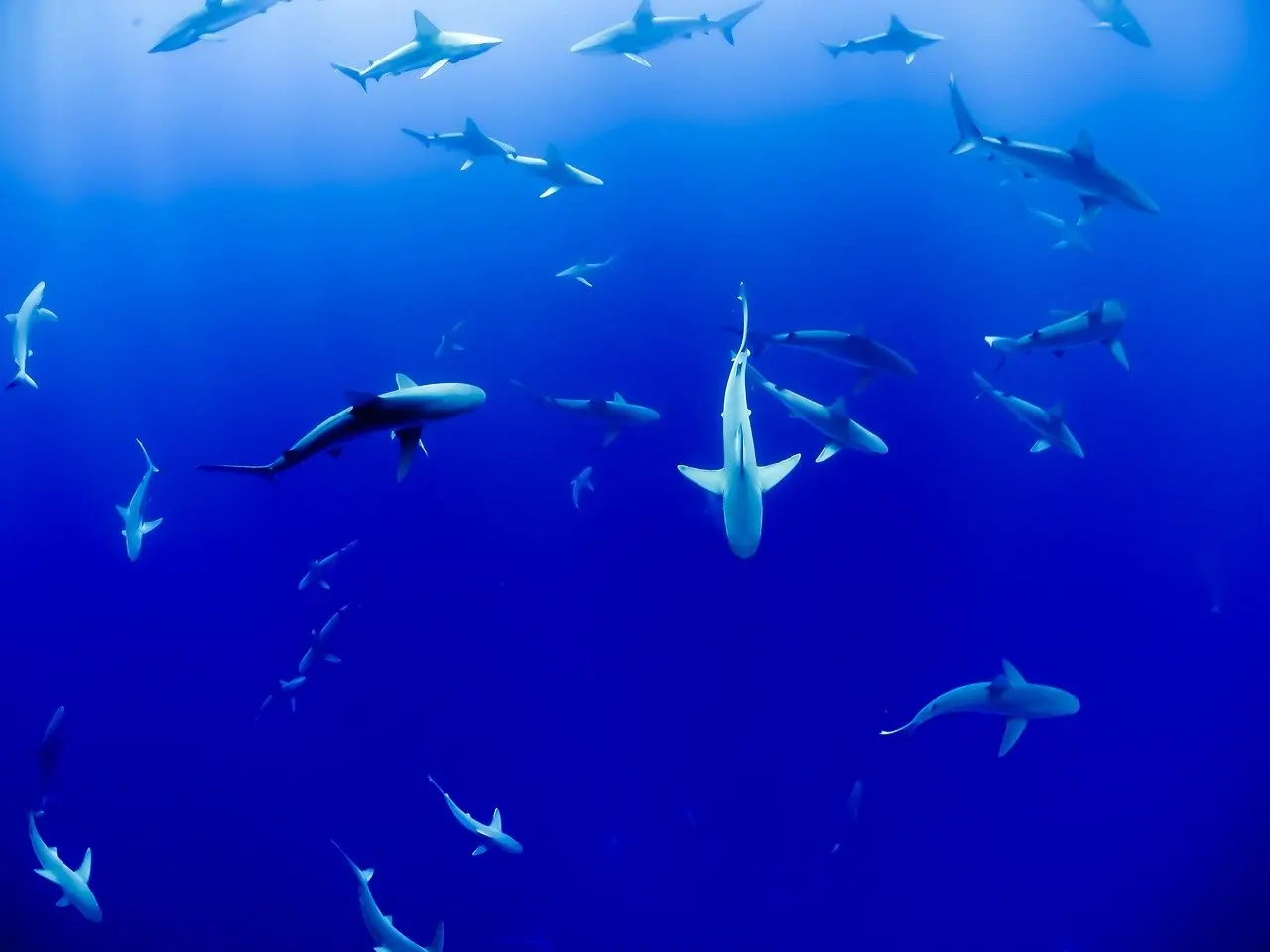
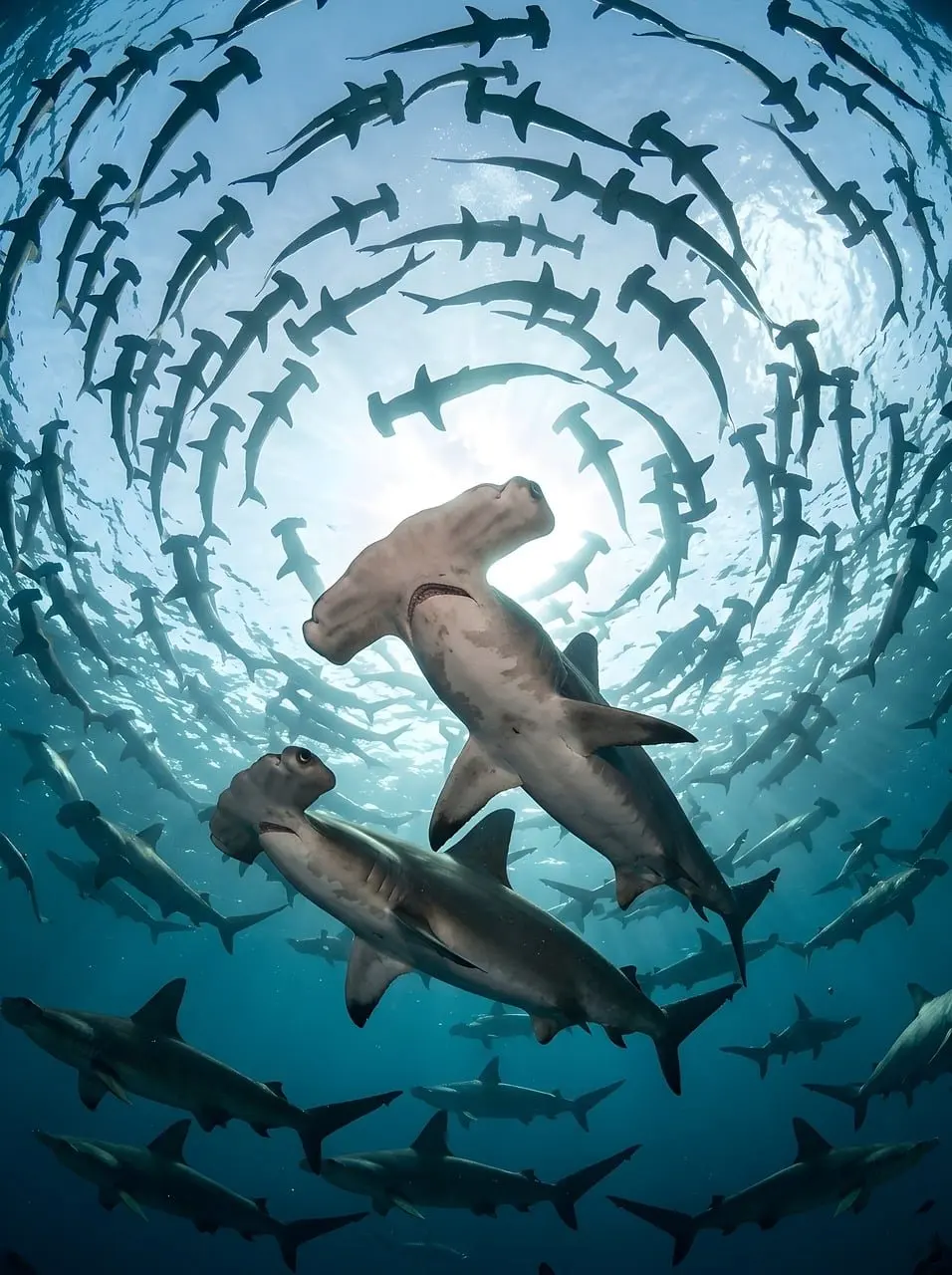
The scalloped hammerhead shark is a schooling species, and Emperor Divers describes hammerheads circling in synchronised patterns above divers. The iconic silhouette is therefore seen from below, looking up, rather than from alongside.
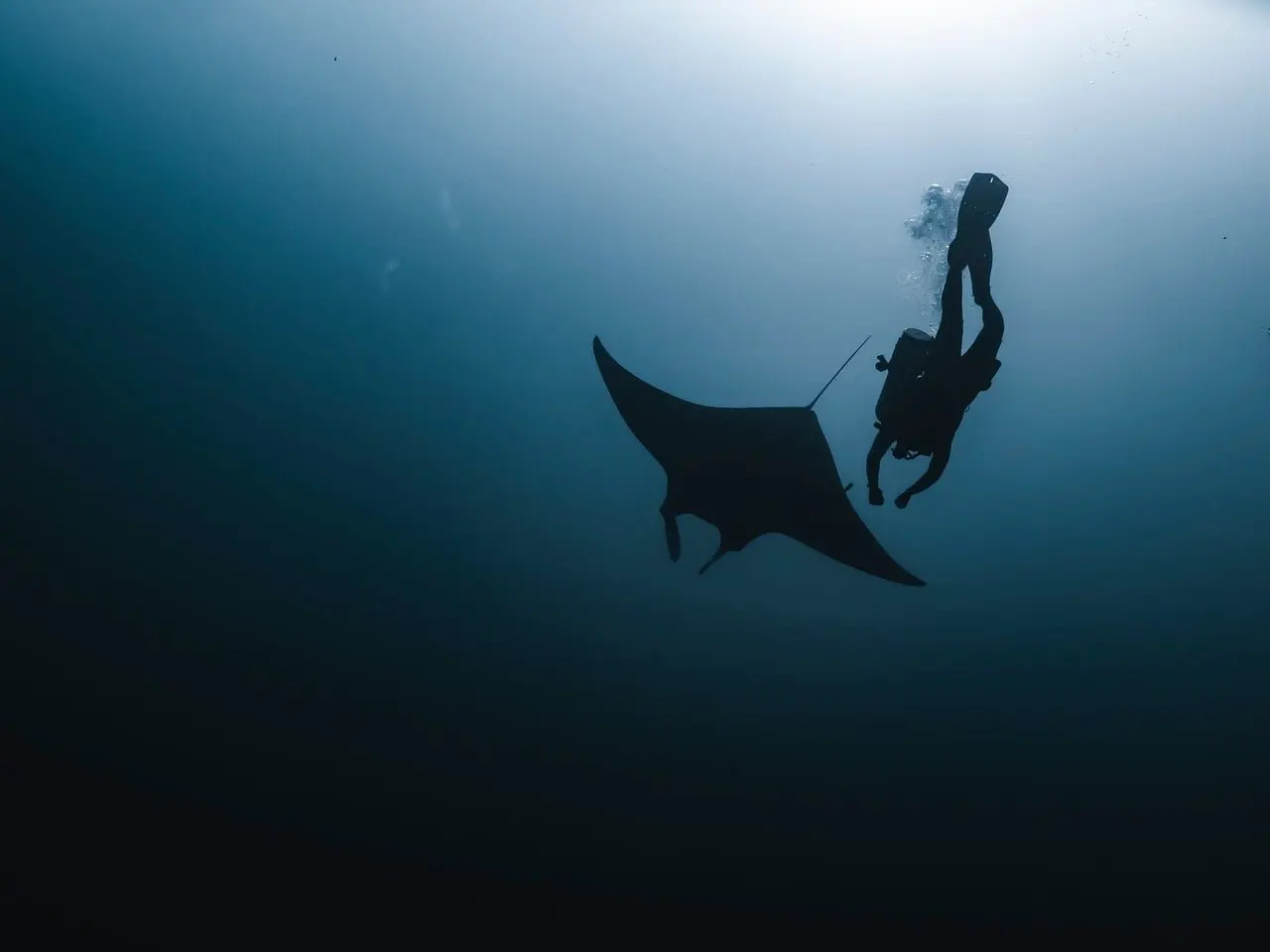
That behaviour shapes how a diver should position. Since the school circles overhead, the best spot is one with an open view upward and outward, held steadily, so the school can pass at its own pace. Constantly swimming about reduces the time spent looking at the water where sharks appear, and a group that stays together gives everyone the same view.
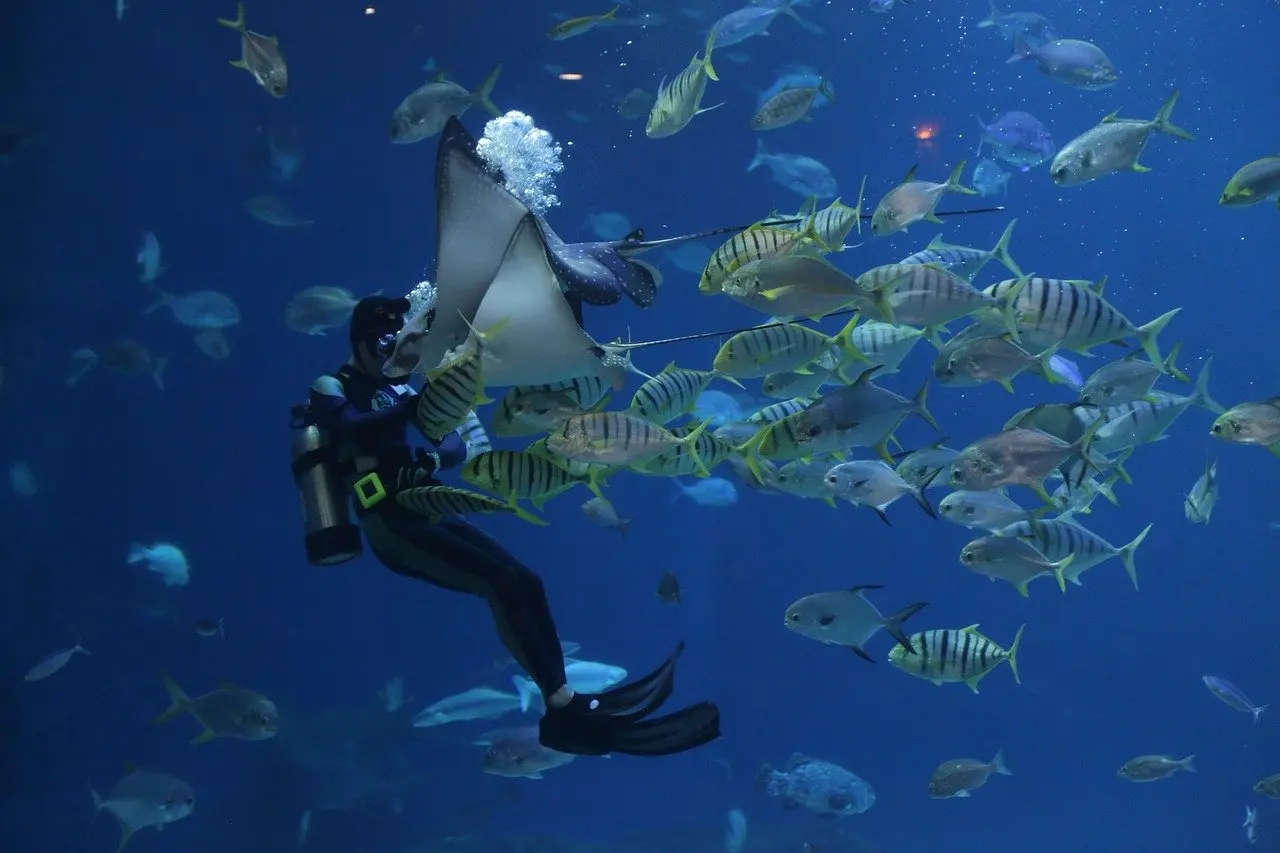
Behaviour in diving terms is also not all-or-nothing. A Red Sea operator notes that individual hammerheads pass through year-round, and that what changes with the season is whether they school. A lone shark and a school are different encounters, and a good briefing will say which one a site tends to deliver.
Depth, currents and conditions
Hammerhead encounters are linked to current and open water more than to any single depth. Emperor Divers ties the Solomon Islands sightings to remote reefs where strong currents bring nutrient-rich water. The Red Sea operator describes Daedalus, its flagship hammerhead site, as an open-water plateau with scalloped hammerhead aggregations. Both point to blue-water, current-exposed diving where the dive is spent scanning the open water beyond the reef.
The Red Sea operator also stresses that site-specific thermocline structure matters more than surface temperature. A thermocline is the layer where water temperature changes sharply with depth, so a warm surface does not rule out a good dive, and a cool reading does not guarantee one. When choosing between dates or sites, ask the operator what the water column looks like at the reef, not just what the surface reading is.
Conservation status
The IUCN Red List assesses each shark species separately, so a status given for one species says nothing about another. Operator material, for instance, lists the oceanic whitetip shark as Critically Endangered, which is a different animal from the hammerheads covered here. The scalloped hammerhead and the great hammerhead each have their own entries, and the current assessment on the IUCN Red List is the place to confirm whether either is endangered before quoting a category.
Troubleshooting a hammerhead trip
- No school appears. A single passing shark is still a hammerhead sighting, and individuals pass through year-round. Keep scanning the blue until the end of the dive rather than concluding the site is empty.
- The current is strong. Strong current is what draws nutrient-rich water to these reefs, so it is part of the setting rather than a fault. Follow the guide’s briefing on where to wait.
- The month looks weak. Shift the focus to the best-ranked site rather than the best month, since Daedalus beats Brothers in every month of the operator data.
- Dates are fixed in low season. Treat the hammerhead as a bonus and plan around other highlights.
Frequently asked questions
What certification do hammerhead dives usually need?
The Red Sea operator advises divers who want access to deeper sites such as Daedalus to upgrade to Advanced Open Water (AOWD). Solomon Islands operators set their own requirements, so confirm the certification level for the specific reefs before booking.
What is the scientific name of the scalloped hammerhead?
The scalloped hammerhead is Sphyrna lewini. The Red Sea operator calls it the flagship species at Daedalus Reef.
Can the Red Sea percentages be used for the Solomon Islands?
They work as a guide to seasonal shape only. The figures are encounter estimates for Daedalus and Brothers reefs, so use them to compare peak, shoulder and low periods, then ask a Solomon Islands operator how its own sites behave.