Anyone planning a macro-focused Solomon Islands trip should know where to find pygmy seahorses in the Solomon Islands: on specific gorgonian sea fans, typically between 16 and 40 m, usually pointed out by a guide.
Pygmy seahorses are tied to individual host corals, so the useful question is which fan, at what depth, and who knows it. This guide pairs each habitat type with its host fan and depth. For the wider picture, see solomon islands marine life.
Where to look in the Solomon Islands
Bargibant’s pygmy seahorse has been found throughout the Coral Triangle, and it lives on healthy gorgonian sea fans rather than on open reef. The practical search area is therefore a wall, slope or structure that carries large, undamaged sea fans in the right depth band, not a whole lagoon or island group.
A site list for the Solomon Islands is best treated as a set of leads to confirm with the operator. For each lead, ask three things: does the site have Muricella sea fans, at what depth, and does a guide currently know which fans are occupied? A site with fans only deeper than the 40 m ceiling reported for the species is not a realistic target for most trips.
Pygmy seahorse species and their host corals
Two species matter most for a macro trip. Bargibant’s pygmy seahorse is the classic sea fan animal, and Denise’s pygmy seahorse is the other name divers hear most often. The species table below compares them on the attributes that decide where to search.
| Species | Host and appearance | Depth, size or season | Planning use |
|---|---|---|---|
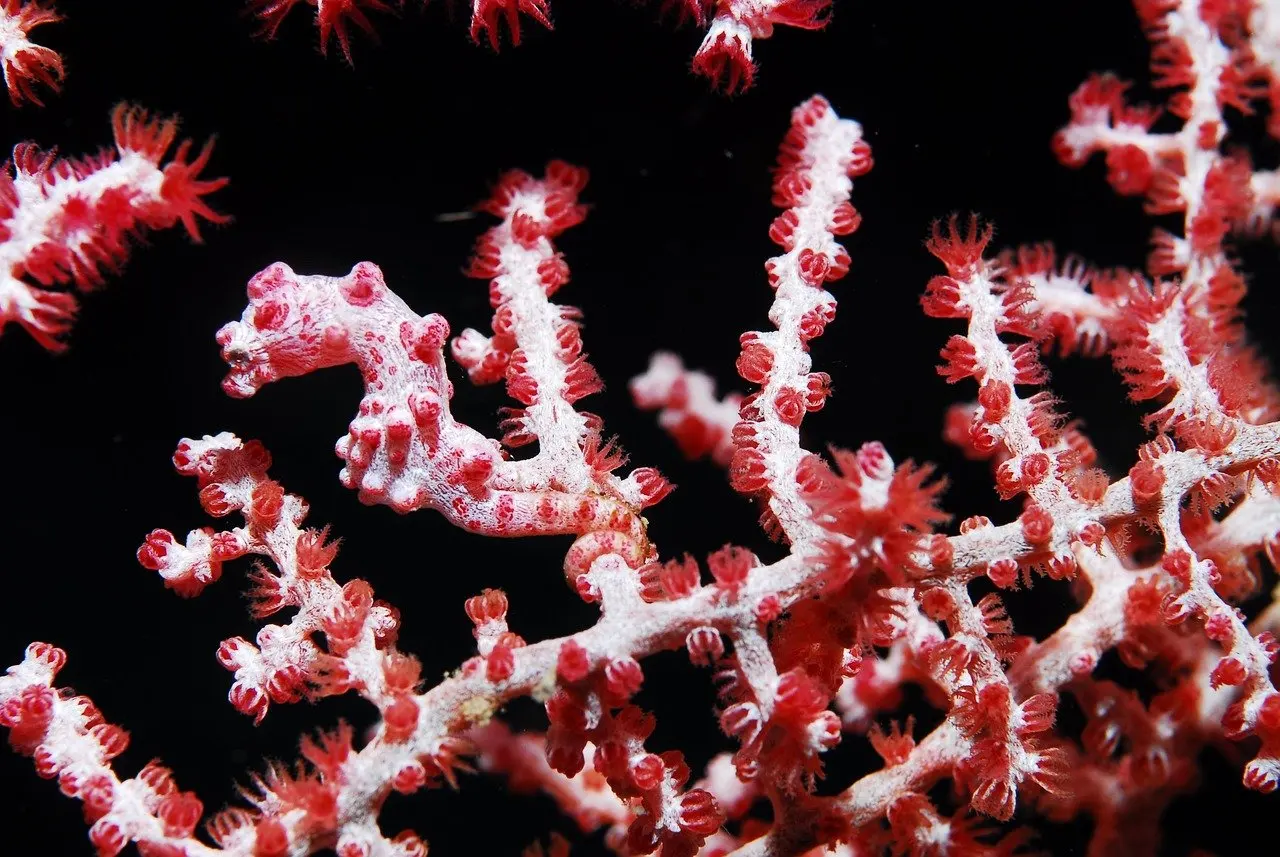
| Bargibant’s pygmy seahorse | Lives on the sea fan Muricella plectana or Muricella paraplectana. Grey-white with red on red fans; whitish with yellow tubercles on yellow fans. | 16 to 40 m; 2.4 cm maximum, head to tail tip. | Ask for red or yellow Muricella fans within this depth band, and expect an animal smaller than a fingernail. |
Figures are from Dive-Sites’ pygmy seahorse profile and the seasonal notes on Voyage Away’s Denise’s pygmy seahorse page.
The species was described in 1970 and named after the diver Georges Bargibant. Its two colour forms follow the host, which is why a diver who has found the right fan colour has already done half the searching.
Reference sites that show the right habitat
Named sites with reported sea fan sightings are listed for Indonesia, and they show the habitat types to ask about in the Solomon Islands. Dive-Sites reports Bargibant’s pygmy seahorse at Raja Ampat, Lembeh and Bunaken, so the animal’s habitat is well documented even where Solomon-specific site names must come from a local operator.
Nudi Retreat
Nudi Retreat is the example for a macro-heavy site that is not a classic wall. Dive-Sites places sightings on the sea fans of the Lembeh Strait’s few coral slopes, especially here. It suits divers who normally expect muck diving: the lesson is that a small patch of coral slope can hold the fans.
Liberty wreck hull
On this wreck, the sea fans on the hull hold animals at 12 to 25 m, pointed out by the guide. That makes it the shallowest benchmark listed here and the most forgiving for divers with limited bottom time. Anyone planning wreck dives can ask whether a wreck on the itinerary carries sea fans on its hull or only encrusting growth, since only fans can host the animal.
Cape Kri slope, Blue Magic top and Lekuan walls
These three are reported for sea fan sightings alongside Nudi Retreat and the Liberty hull. They show the three structures to ask about: a slope, the top of a seamount-style site and a vertical wall. Each suits a different diver. Slopes allow a slow, shallow search; walls reward good buoyancy because the fans project into open water; tops suit divers who want to stay at the shallower end of the depth range.
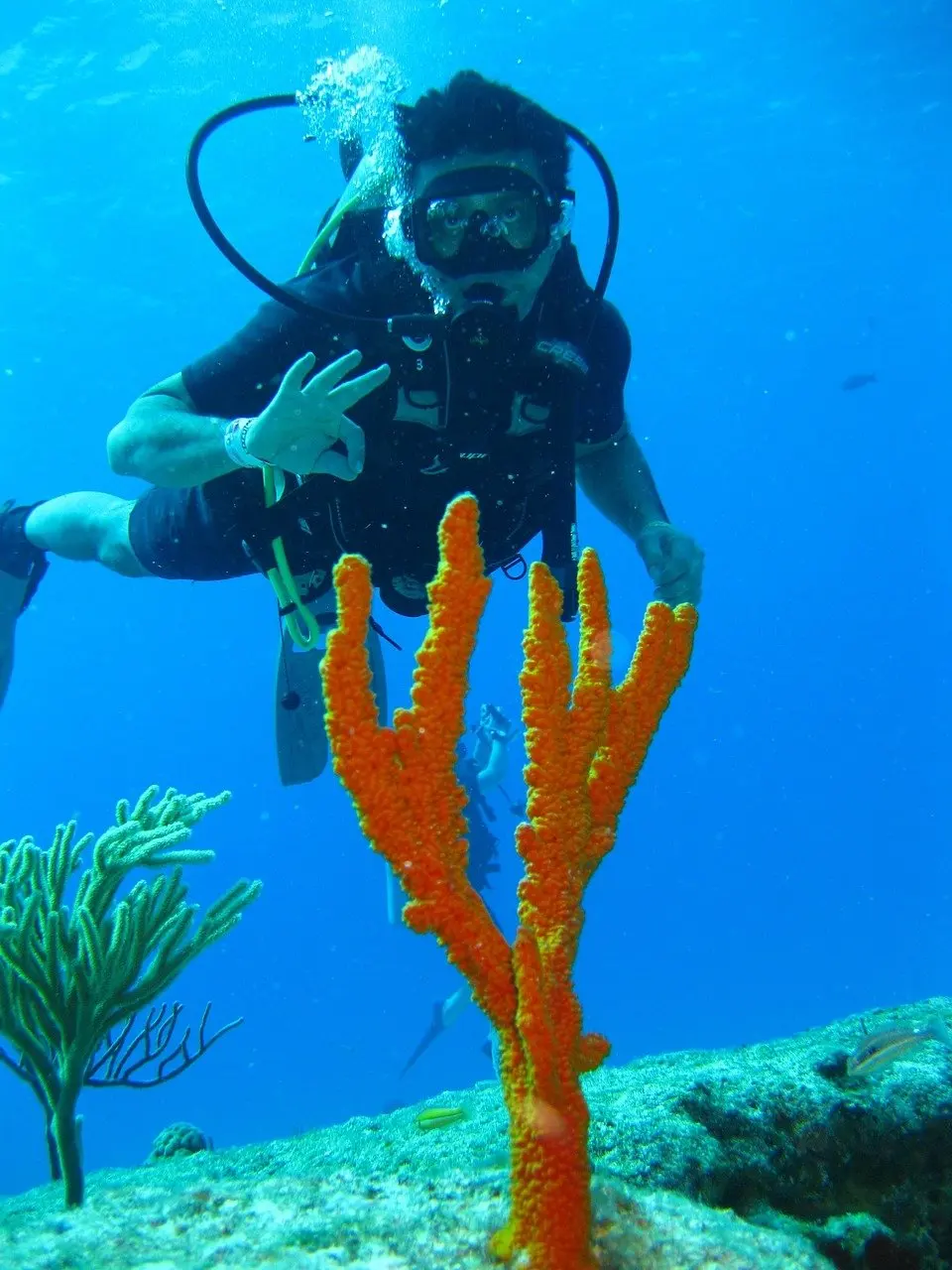
Spotting a pygmy seahorse on a sea fan
Spotting works by shape and movement, not colour. Dive-Sites advises looking for the outline of its head in profile, then watching for small movements away from light. The body matches the fan so closely that scanning for a colour change rarely works.
- Match the fan first. A grey-white animal with red bumps sits on a red fan, and a whitish animal with yellow tubercles sits on a yellow one. A fan of the wrong colour is unlikely to be the host.
- Scan branch tips. The animal is at most 2.4 cm, so the head profile is the cue, not the whole body.
- Light carefully. A pygmy seahorse moves away from light, so a sudden beam can make it shift to the far side of the fan.
- Do not chase it around the fan. Let the guide’s pointer show the position and keep your own position stable.
That is why most divers rely on a guide for the first sighting, covered next.
Do you need a guide?
Yes, for practical purposes. Dive-Sites notes that guides know every inhabited sea fan and point the animal out with a stick. A diver searching alone must check many fans, each of which can be damaged by repeated handling or fin contact.
When comparing Solomon Islands operators, ask which guides have recent sightings of Bargibant’s pygmy seahorse and whether the briefing names the site and fan depth. A guide who can give that detail is more useful than one who only promises macro life in general. For a broader site-by-site view of what lives where, see solomon islands dive sites marine life.
Behaviour around pygmy seahorses
The core rule is to keep buoyancy and touch nothing. Master Liveaboards advises divers to keep their buoyancy and not touch anything, especially the soft coral home, because these corals take decades to grow and are extremely fragile. A fan damaged by one careless fin kick may take decades to recover, and the animal living on it goes with it.
Photography adds its own limits. Dive-Sites suggests that two or three photos are enough, while Master Liveaboards says bright light should be limited, ideally to no more than five flash-lit images. If several divers share a fan, take turns rather than crowding. Divers building a macro kit can find setup advice in this guide to underwater photography solomon islands.
Decision checklist before booking
- Ask the operator which sites have Muricella sea fans, and at what depth.
- Confirm the target depth falls inside the 16 to 40 m range reported for Bargibant’s pygmy seahorse, and choose the shallower wreck or slope option if bottom time is limited.
- Ask whether a guide with recent sightings will lead the dive, since guides know the inhabited fans.
- Check seasonal timing for the specific region instead of relying on a season from another country.
- Agree a photography limit with your buddy and guide before descending.
Frequently asked questions
How big is a pygmy seahorse?
Bargibant’s pygmy seahorse reaches 2.4 cm at most, measured head to tail tip, so it is easy to overlook against the fan.
Is Bargibant’s pygmy seahorse threatened?
The IUCN lists it as Data Deficient, which means its conservation status has not been resolved. CITES lists it, like all seahorses, in Appendix II.
Which lens and aperture suit pygmy seahorses?
Master Liveaboards recommends a 60mm or 100/105mm macro lens that can achieve 1:1 magnification, with high apertures such as f/16 to f/22 to keep the animal in focus.
Are Denise’s and Bargibant’s pygmy seahorses the same animal?
No. They are different species that live in the same waters, with Bargibant’s tied to Muricella sea fans and Denise’s appearing in seasonal sighting records that vary by location.